
You think oxygen is your ally, but you merely adopted the oxygen. I was born in it, molded by it. I didn’t see carbon dioxide until I was already a man!
- 0 Posts
- 46 Comments
Joined 10 months ago
Cake day: March 4th, 2025
You are not logged in. If you use a Fediverse account that is able to follow users, you can follow this user.
Glad to hear we’re not the only country with an imperial hangover! Our experience is pretty much the same. Bathroom scales, gym weights etc all have both kg and lb on them. Over time society here does seem to be shifting more toward metric; most people tend to know their height in both these days, whereas 20 years ago it would have been predominantly ft rather than cm.
Do you think lbs change depending on what we’re measuring? A lb is a lb here too…
I’d argue a comprehension of both metric and imperial is superior, as well as provides insight into which the inferior measurement is, but you do you mate.
Actually we use both. For example, body weight is (traditionally) stone and lbs, but parcel weight is usually kg.
The same is true for length; height in feet, but stuff like room measurements in cm.
I think the only area where we’re actually consistent is traveling distance? All signs and gauges are in Mph rather than Km/h. In fact the only time I can think of someone talking about distance in kilometres, is to do with sports (IE a 5k/10k running event).
Soccer was only ever a nickname tbf, It stood for a(socc)iation football.
I guess an equivalent would be like calling your police the bobby force.
Old people burning,
old people burning,
put your hands up.
Username checks out.

 10·3 months ago
Congrats! Out of the usual suspects, (nginx, traefik & caddy), id say nginx has the steepest learning curve, so it’s definitely something to crow about mate! I know professionals in the tech industry that have a hard time with nginx config, so an enthusiast getting it down is a bigger deal than you’re giving yourself credit for.
I host various services for friends and family; and here are a couple I think will be of particular interest to you:
- matrix server with element clients. (Self hosted discord/WhatsApp alternative which is open source unlike TS).
- Drop server and client setup (self hosted steam like experience).
Another thing I would strongly suggest doing, is setting up a single sign on Auth server. Something that will allow your friends and family to have one login for anything you setup. Personally I use keycloak. But there are other options like authentik and voidauth that are worth looking at too!
Congrats again on the progress mate! You’re smashing it so far.
*knight.
A white night would be a truly terrifying sight.

 2·3 months ago
You perceive colour/color and catalogue/catalog to be pronounced differently?
I’d have to disagree with that, and it seems American grammar is still aligned with British in that they’re still identical phonetically. I think it’s important to disregard accent in this discussion, as it isn’t relevant to the spelling. An Indian man saying colour will sound different to an Irishman saying colour for example, but that has nothing to do with the spelling; just the respective accent.
The difference in spelling was an act of defiance by the Americans during the British empire days. In many cases it has nothing to do with a difference in pronunciation . It’s an interesting slice of history, and I’d recommend anyone who isn’t aware to read up on the subject it really ruffled some feathers on this side of the pond, and some 200 years later, people still aren’t over it. It was some of the highest quality trolling in recent history (one that I believe trumps the Boston tea party; but I guess that’s a matter of opinion).
Are you saying that miaow and meow sound different phonetically to you?
Its not cockney rhyming slang, but rather a simple variance in spelling. Do colour Vs color/ catalogue Vs catalog etc… sound different phonetically to you also?
I’m a native English speaker, so maybe that’s why they seem identical; but I could see how a different mother tongue would change that perspective.
Edit: removed aluminium because I momentarily forgot that Americans say ‘aloomanum’ and that one isn’t an example of a spelling variance with identical phonetics.
 41·3 months ago
It’s called planned obsolence, and it is absolutely a common theme in consumer products. It’s not exactly new either. We were taught about it in Design & Tech classes here in the UK.
That’s not to say general wear and tear in soldered joints and so on doesn’t also happen, of course it does. But often, this is seen as a feature, rather than an issue by the manufacturer, and thus becomes a part of the design, rather than something to improve upon.
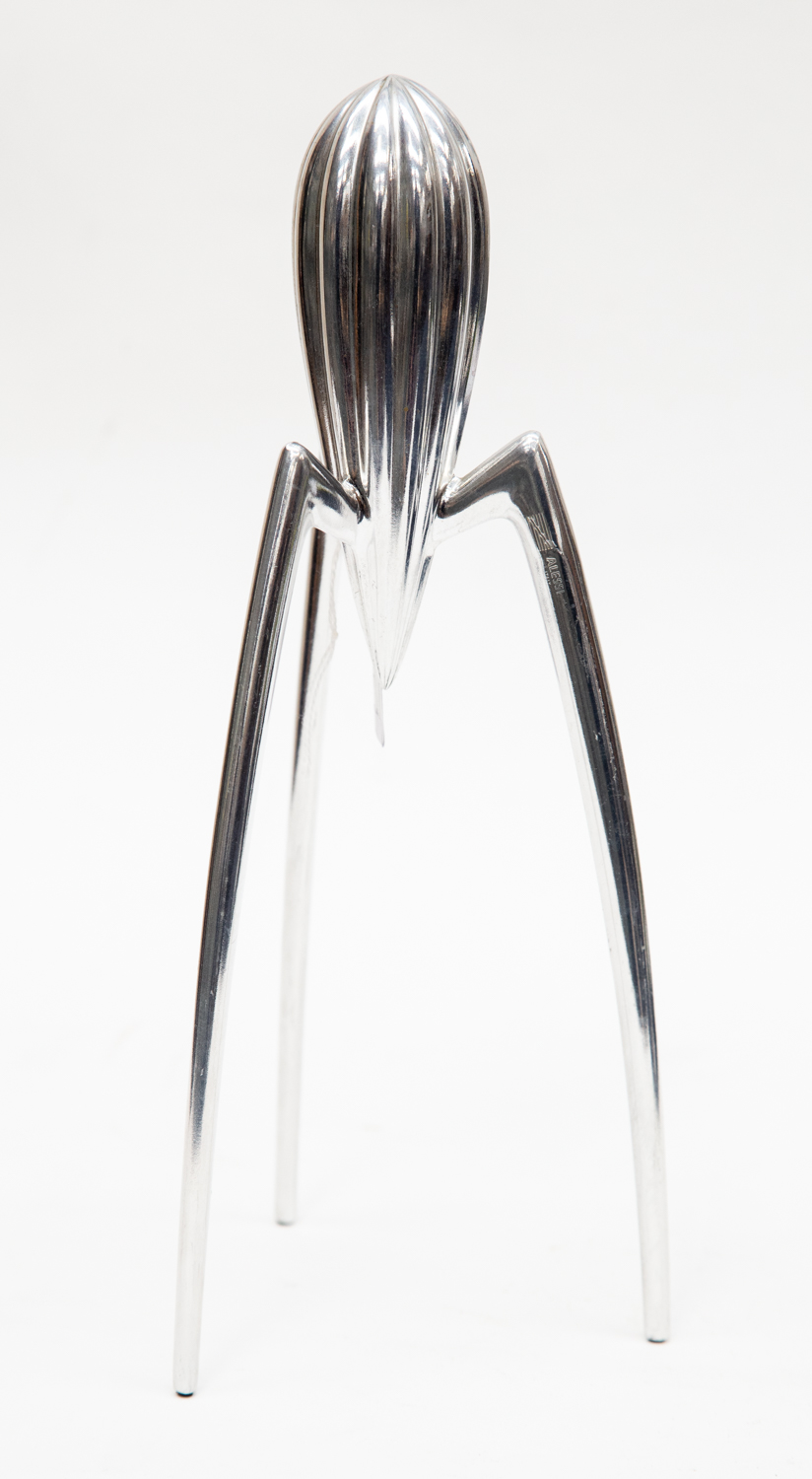
When we were taught this some 20 years ago, I remember the teacher showing us one of these lemon juicers and pointing out the biggest design flaw was its lack of failure points. The likelihood is, it will last years; ensuring no repeat custom… Stick a hinge on it like this one, and you’ve gone from a product that will be handed down a generation; to one that will likely fail after X amount of uses. Companies often test for X too, when designing, And will aim for a window slightly larger than any warranties, in order to protect themselves from having to pay out, but also giving the customer a false sense of security.
 11·4 months ago
Freedom advocate my arse.
“Choose from A or B, do not form an opinion”
why do you think I give a shit if the democrats have support? I can point to fascism from the current gov without supporting the limp dicked opposition. Stop treating politics like a sports event, it’s embarrassing.
The conservatives introduced the online safety act. Labour enforced it, but labour haven’t been a progressive party in the UK for decades.
“Increasingly far left government”, tell me you know absolutely nothing about the subject, without saying you know absolutely nothing about the subject.
The US (more specifically Project 2025) is a huge driving force in this, they’re just domestically focused on the “make America white again” stage of their plans to return to a nuclear family, but that won’t stop them using their lobbying powers, or control over tech monopolies to strongarm other countries into submission.
I wholeheartedly refute the assertion this comic makes that the word ‘lock’ is onomatopoeic.


I questioned it a few years back on reddit and was told it’s an old American saying for white people, and its apparently from the sound a whip makes rather than the biscuit.
My only regret is that I have boneitis